
- Offers
- Service providers
- Knowledge base
- Tools
- Arena
- Contact
- Partners
EN
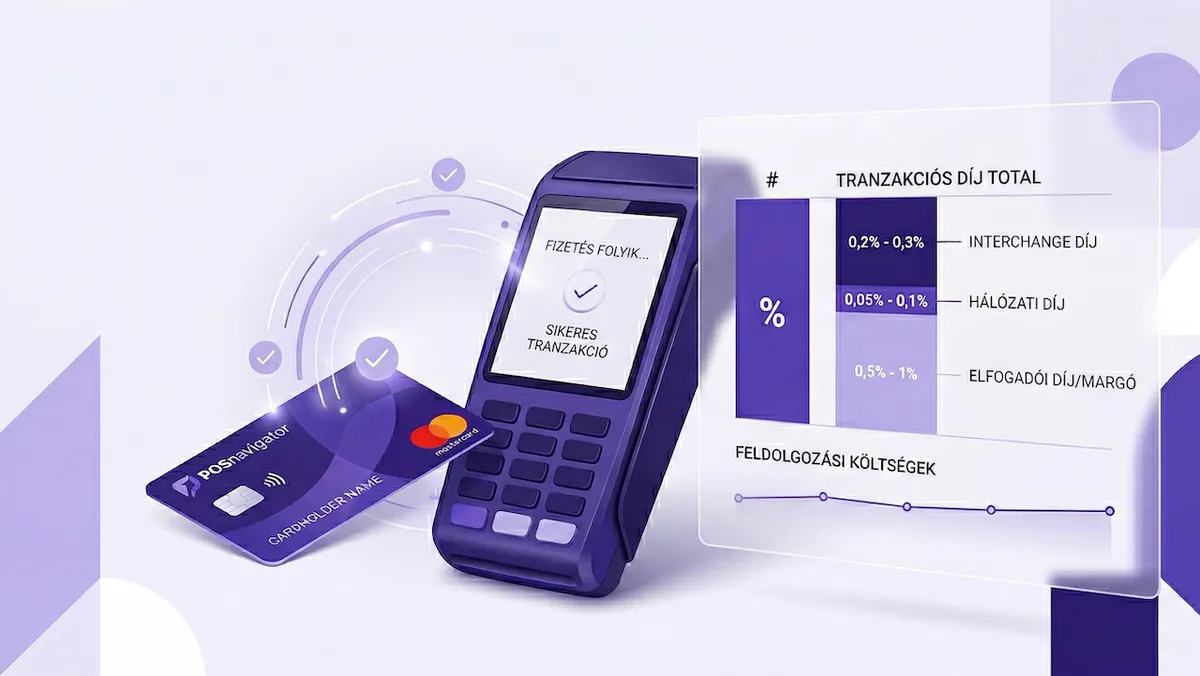
If you accept card payments in your store or online shop, you pay several different fees on every transaction. The largest component is typically the interchange fee. But what exactly is it, who sets it, and how does it affect the prices you pay as a merchant?
In this article, we explain how interchange fees work, the EU regulation that caps them, and why understanding this matters when choosing a payment service provider.
The interchange fee is the amount that the acquiring payment service provider (your bank or payment processor) pays to the card-issuing bank for every card transaction. In simple terms: when a customer pays by card at your shop, your payment provider transfers a small amount to the bank that issued the customer's card.
This fee is set by card networks — primarily Visa and Mastercard — and varies by card type. Although you don't pay it directly, your provider builds it into your transaction fee, so ultimately you bear the cost.
The interchange fee is one of the most important, yet least understood, cost elements of card acceptance. Many merchants encounter it indirectly in card acceptance fees, but fewer understand exactly why it exists, who pays for it, and the economic logic behind it. Without understanding this, it is difficult to truly understand how the cost of a bank card payment is structured.
When a customer pays with a card, the transaction involves not only the merchant and the customer, but also a complex system of actors: the merchant’s accepting partner, the card company, and the card-issuing bank. The interchange fee in this chain is the amount that typically goes to the issuing bank, and its purpose is to finance and encourage card issuance, the related infrastructure, and the spread of card use in general. High interchange fees typically encourage card issuers to promote card issuance and usage to customers (these are used to finance, among other things, cash-back programs), which ultimately helps to increase card adoption. Therefore, interchange fees are particularly important in markets where card adoption is still low.
Let's take a simple example: a customer buys something for HUF 10,000 and pays by card.
Behind the scenes, the following happens:
The customer's card communicates with your POS terminal or online payment gateway.
Your provider (acquirer) processes the transaction and credits the amount to your account — but not the full HUF 10,000.
Your provider deducts a transaction fee, a significant portion of which is the interchange fee that goes to the card-issuing bank.
The remaining portion covers the card scheme fee and your provider's margin (acquirer margin).
So from a HUF 10,000 domestic retail debit card purchase:
Interchange fee: HUF 20 (0.2%)
Card scheme fee: typically HUF 5–15
Provider margin: varies, typically 0.3–1.0%
Your account receives approximately HUF 9,920–9,960 — the exact amount depends on your provider and the card type used.
In 2015, the European Union adopted the Interchange Fee Regulation (EU 2015/751) to make the card payment market more transparent and competitive. The regulation sets the following caps:
Domestic/EEA debit cards: maximum 0.2% per transaction
Domestic/EEA credit cards: maximum 0.3% per transaction
Important: these caps apply only to consumer cards. For commercial (corporate) cards and cards issued outside the European Economic Area, there is no interchange cap — fees can reach 1.5–2% or higher.
The regulation also requires providers to itemize fee components for merchants — unless the merchant specifically requests blended billing in writing. This transparency obligation helps you see exactly how much you pay and to whom.
Not all card transactions are equal. The interchange fee depends on the card type, issuing country, and transaction method:
Debit cards (Visa Debit, Mastercard Maestro, Visa Electron): 0.2%
Credit cards (Visa Credit, Mastercard Credit): 0.3%
Commercial/corporate cards: 1.0–2.0% — no EU cap
Non-EEA cards (e.g., US or Asian tourist cards): 1.0–2.0% or more
American Express: proprietary fee structure, typically 1.5–3.0% — not covered by the EU interchange regulation
This is why some merchants — particularly in tourism or B2B — face significantly higher card acceptance costs than the "average 0.2%" might suggest.
The interchange fee directly influences what you pay for card acceptance. You'll encounter it in two pricing models:
Most providers charge a single percentage fee (e.g., 1.2% per transaction). The interchange fee is already included — if the actual interchange is lower, the difference becomes the provider's profit. It's simple and predictable, but not always the cheapest option.
Some providers transparently itemize the three fee components: interchange + card scheme fee + provider margin. You can read more about this in our detailed article on interchange++ pricing.
In practice, the interchange fee itself doesn't vary much for most Hungarian merchants, since the majority of transactions come from domestic debit cards (0.2%). The real difference lies in the provider's margin — and that's what you can compare using the POSnavigator cost calculator.
There are several situations where the interchange fee deserves extra attention:
Tourism sector (hotels, restaurants in tourist areas): many foreign card payments with higher interchange fees.
B2B sales: high proportion of corporate cards with no EU cap.
High-value transactions: for payments above HUF 100,000, even small percentage differences add up.
IC++ pricing contracts: you see the interchange fee directly and should monitor which card types dominate your sales.
If your sales are predominantly domestic debit card transactions, the interchange fee is relatively stable and low (0.2%). In that case, focus on hidden costs and the provider's own margin when choosing a service.
While you can't set the interchange fee yourself, there are ways to optimize your card acceptance costs:
Compare providers: The POSnavigator comparison tool helps you find the best deal based on your actual transaction volumes.
Know your transaction mix: Measure exactly what proportion of your customers pay with domestic and foreign cards, as well as the ratio of retail and business cards. It is particularly important to see if the number of transactions with business or non-business cards issued in the EU is significant, as their interchange fees are exceptionally high. This is a critical aspect in the IC++ pricing model, as you pay the real costs of the card types directly.
Offer alternative payment methods: If your statistics show that the rate of Hungarian corporate card payments is high, look for and offer more cost-effective alternatives, e.g. (instant payment system).
Negotiate with your provider: For higher volumes, providers may be willing to reduce their own margin, especially under IC++ pricing.
Not directly — your provider (acquirer) pays it to the issuing bank. However, your provider includes the interchange cost in the transaction fee it charges you, so ultimately you bear the expense.
Credit card issuers take on greater risk (they extend credit to the cardholder), so they receive a higher interchange fee as compensation. That's why EU regulation allows 0.3% for credit cards versus 0.2% for debit cards.
The regulated caps (0.2% and 0.3%) have been stable since 2015 with no planned changes. However, for non-regulated card types (commercial, non-EEA), the card networks may adjust fees regularly.
The interchange fee is just one component of the total transaction fee. The full fee = interchange fee + card scheme fee + provider margin. When your provider says "1.5% transaction fee," all three components are included.
Yes. Apple Pay and Google Pay are card-based payments — behind the scenes, the same Visa or Mastercard transaction takes place with the same interchange fee. The difference is only in how the payment is initiated (NFC phone vs. physical card), not in the fee structure.
Data reflects April 2026 information. EU interchange caps are based on Regulation (EU) 2015/751.
Weekly summary of the best POS terminal offers
We handle your data confidentially. Details in the privacy policy.